Showing posts with label Indonesia National Park. Show all posts
Raja Ampat Marine Protected Area | Bantimurung National Park | Kelimutu National Park
Raja Ampat Marine Protected Area
Raja Ampat is a paradise for lovers of underwater marine life. The one million hectare area is a habit for 1,318 species of coral fish (27 of which are endemic), 533 species of coral reef (representing 75% of global coral reef species), 699 species of molluscs, 15 species of marine mammals, and five species of turtles, it's surely no wonder that this site is nickname "The Amazon of the Sea".
With such an impressive portfolio of wildlife, this conservation park offers diving and snorkelling as its main tourist attractions. In addition to acquainting oneself with a wealth of sea creatures, one can also dive on the wrecks of airplanes and other war materials at several points.
For non-divers, the main attraction here is island hopping. Viewed from above, Raja Ampat is a cluster of 610 islands scattered across the blue ocean in a manner similiar to that of the "dragon back" islands in Ha Long Bay in Vietnam or Phi Phi in Thailand.
Towards the end of last year, Raja Ampat organised its first ever Marine Festival, and the local government plans to turn the festival into an annual event in order to promote a side of the region that has, until now, been under-exploited, namely its culture and cuisine.
How to get there
Raja Ampat is located in Papua. Fly to Domine Edward Airport, then continue your expedition on the Marina Express Boat, which departs everyday at 2pm from Pelabuhan Rakyat (the people's harbour). Information on Raja Ampat and its various tourist attractions can be found at www.gorajaampat.com.
Bantimurung National Park
"The Kingdom of Butterfly" is the nickname Alfred Russel Wallace gave this place. When visiting the area in 1857, The British adventurer saw 300 species of butterfly living in the verdant Bantimurung-Bulusaraung area. The findings of his explorations were then written up in an iconic book entitled "The Malay Acrhipelago", which was published in 1869. This was then used as the basis for establishing the imaginary Wallace line, a line of climate demarcation that runs between the islands of Sulawesi and Kalimantan.
The presence of a number of caves with a paintings on their walls is another unique phenomenom to check out in Bantimurung-Bulusaraung, and research has concluded that the caves were used by prehistoric humans. The 43,000 hectare national park also contains The Bantimurung waterfall, which has become a popular weekend destination for the people of Makasar.
How to get there
Bantimurung-Bulusaraung straddles two Districts in South Sulawesi, namely Maros and The Islands of Pangkajene. To get there, fly to Makasar, then continue your journey overland for 40 kilometres. Information on Bantimurung-Bulusaraung can be found at www.tn-babul.org.
Kelimutu National Park
The Main attractions here are the three lakes that sit at the top of Mount Kelimutu (1,700 metres above sea level) which have waters that myteriously change colour. The lakes are named Tiwu Ata Mbupu, Tiwu Nuwa Muri Koo Fai and Tiwu Ata Polo. The exact moment when the lakes change colour cannot be predicted, but it is claimed that the canges are result of a combination of the refraction of the sun's rays, the presence of micro biota in the water and chemicals on the walls of the lakes.
in addition to the lakes, the national park also boasts various plants and animals, some of which are endemic of the area. Fauna here includes Wallacea owls, Florenese eagles, bulls and anteaters.
How to get there
The National Park of Kelimutu is located in East Nusa Tenggara (NTT). Fly to Kupang, and then on to Ende, and then continue your journey overland for the last 100 kilometres. The Kelimutu National Park Office has constructed an access road to make it easier for tourists to enjoy beauty of the lake . Information on Kelimutu can be found at www.tnkelimutu.com.
Lorentz National Park | Bunaken National Park
Lorentz National Park
Of the seven Indonesian locations listed UNESCO World Heritage Sites, the Lorentz National Park is the one that initially seems the least popular, and yet it contains an absolutely phenomenal wealth of flora and fauna. With an area covering 2-3 milion hectares, Lorentz National Park is the largest conservation area in South East Asia, and is home to various types of ecosystem, ranging from coastal, wetlands, lowland forest, sub-montana, montana and sub-alpine, to alpine environments that stretch all the way up to 5,000 metres above sea level.
Lorentz is also the only site in South-East Asia has all-year-round snow on its mountain peaks, although its glacier has now shrunk from twenty to two square kilometres thanks to global warming. Natural music is provided here by the 350 bird species that live peacefully in branches of the park's gigantic tress.
Sir David Attenborough, the legendary BBC documentary maker, has visited the park a number of times to film its amazing birds of paradise. Take a look at "Attenborough in Paradise" for an idea of what you can expect at Lorentz.
Lorentz National Park extends for 150 kilometres, from the mountain chain in the north to the Arafura Sea in the South. This national park is also now inhabited by human, after 24 million years of isolation.
How to get there
The Lorentz National Park is located in Papua . Fly to Timika, then continue your journey on a small plane to the National park, or take a bout heading south from the harbour at Sawa Erma. Stamina and a lot of anti-mosquito cream are necessary to conquer this wild Papua enviroment.
Bunaken National Park
Bunaken National Park is the first diving spot in Indonesia to go global and Bunaken is, in fact, the name one of the islands in the 79,000 hectare marine park. The other island in the chain include Manado Tua, Mantehage, Nain and Siladen.
The Bunaken National Park offers exceptional underwater scenery, especially in the straits that separate the five islands. Officially declared the National Park by the government in 1991, Bunaken is home to around 3,000 species of fish, and 300 different kinds of coral reef. At its 40 diving points divers can find Marlin, tuna, manta rays, barracuda, reef sharks of both the black tip and and white tip varieties, and hammerhead sharks, One of the Bunaken National Park main icons is the ancient so called "King of the Sea", the coelacanth fish.
In his famous jurnal, Alfred Russel Walace, the British explorer who embarked on an expedition to the islands of Nusantara (what is now known as Indonesia) between 1854 - 1862, wrote that Manado was one of the most beautiful places int eastern hemisphere.
How to get there
Bunaken is one of the most accessed national park. Its island are even visible from the main road connecting Manado and Minahasa. To get there, fly to Manado, and then continue your journey by a taxi of the diding operator's base camp. Information on Bunaken can be found at www.bunaken.org.
Way Kambas National Park
Way Kambas National Park (WKNP) is undoubtedly one of the prime tourist attractions to be found in Lampung, a province that sits on the southernmost tip of Sumatra. As well as having the area's most famous attraction, namely its elephant school, the Way Kambas National Park also houses the way Kanan Resort, The Sumatran Rhino Santuary (SRS) and the Elephant Conservation Center (ECC), all of which are equally unique and well worth the visit in their own right.
Beast such as Torgamba, a resident 31-year-old male rhinoceros who have been living at the Sumatran Rhino Sanctuary since 1998 and who has brought to Indonesia from a British Zoo, also give the park character. The Sumatran rhino is a notoriously slow breeder and the Sumatran Rhino Sanctuary has, until now, been able to birth any calves. Ratu, a female rhino living at the sanctuary, recently tested positive in several pregnancy tests, however it remains to be seen if she'll carry her offspring to full term.
Located in the Regency of East Lampung, Way Kambas National Park spans an area of 130,000 hectares and was officially designated a National Park in 1989. Today, Way Kambas National Park has become synonymous with its elephant school. At the Way Kambas Elephant Training Center (ETC), the animal that is often seen as a pest and a mortal enemy by farmers is "schooled" to become lovable creature that is amusing, gentle, and good natured. The elephant are also trained to perform circus-like acrobatic stunts and tricks, and even to dance to the beat of Indonesian dangdut music.
The Elephant Training Center is located about 112 kilometers from the City of Bandar Lampung. Covering an area of about 130,000 hectares, The Elephant Training Center is not only inhabitants by Sumatrans Elephants, but is also the habitat of the Sumatran Rhino, as well as several other protected animals. The Way Kambas National Park reaches its peak, in terms of visitor numbers, during the summers months of July through to September.
The Elephant Training Center has trained and produced hundreds of wild elephants, which are now use as transportation and to do heavy work. Many have also become tourists attractions, and some now live in amusement parks in various cities around the country, such as Ragunan Zoo In Jakarta, and the Borobudur Temple Tourism Park in Central Java. Uniquely, the elephant students at the Elephant Training Center Way Kambas have been given the commonly used names of their human counterparts; namely Kartijah, Karnaningin, Kartini, Haryono, Rizka and others, so do not take offence if you find that you share a name with an elephant.
The elephant students are taught incredible tricks at the Elephant Training Center, such as shaking hand, playing soccer, saluting, draping flowers, tug-of-war, and dancing to music. If you possess nerves of steel, than you can also try your hand at one of the center's most thrilling attractions;namely having trained elephant employ great precision to weave over and around you as you lie still on the ground.
A less extreme adventure can be had by riding on an elephant as it lumbers along well beaten paths and around swamps for half an hour of a full hour. You'll feel like a maharaja from a bygone era. You can also live out your Hannibal fantasies by enjoying the experience of riding an elephant on a wild jungle safari. There's even an elephant night safari, which is no less spectacular.
The Way Kambas National Park is also a great camping spot from which tent heads can explore the local natural splendour. At first glance the park, with its vast grass fields, seems to resemble a savannah. In some places around the park, elephant whose feet are chained can be seen. These are a wild elephants in process of being trained. The Way Kanan Forest is also worth checking out, and its typical lowland forest ecosystem consisting of fresh water swamp forests, grassland, bushes and coastal forests. As one of the richest ecosystem in Indonesia, The Way Kambas National Park possesses a vast variety of flora and fauna species. Plant species in the park included api-api (Avicenia marina) and many others. The park also contains about 50 species of mammals, many of them critically endangered species, including the Sumatran rhino, the Sumatran elephant, the Sumatran tiger, honey bears and red monkeys.
No visit to Way Kambas is complete without a trip to the Way Kanan Resort. This spot also houses research and breeding centers for the Sumatran rhino and the Sumatran tiger, which come complete with laboratory facilities and dormitories for researches.
It is at the Way Kanan resort that the aforementioned Sumatran rhino Sanctuary is situated. The Sumatran rhino Sanctuary plays a vital role in the conservation of the slow-breeding Sumatran rhinoceros, albeit one that is often inhibited by the very nature of the species that the sanctuary is trying to preserve. It is estimated that there are currently only around 200 wild rhinos spread across the forests of Sumatra and Kalimantan. Within the sanctuary itself meanwhile, there are currently only five captive rhinos that roam a 100-hectare plot which is surrounded by an electric fence.
Despite decreasing populations, the park is also still home to a few critically endangered Sumatran tigers. Their number have fallen dangerously low over the past five years. Park rangers estimate the current number of tiger living in the 125,000 hectare national park to be less than 30, compare to estimates of between 36 and 40 tigers in 2000.
Like their rhino counterparts, Sumatran tigers also reproduce at a very slow rate, and serious poaching by animal traders and deforestation as a result of illegal logging. To date, the park has implemented several measures designed to prevent poaching. This include increased patrols and CCTV surveillance, as well as increasing the number of rangers in the park, however, these initiatives are easily eclipsed by the insatiable demand for timber and exotic taxidermy.
Sad extinction battles aside however, the Way Kambas National Park is a stunningly beautiful place in which to enjoy outdoor activities such as bird-watching (the rare white winged wood duck is just one of over 400 species that can be found in the park), backpacking, trekking, camping, photo hunting, and if one is lucky, stumbling across some truly rare animals and plants. Visitors can also traverse the fringes of rivers such as the Way Kanan, Rawa Gajah, and Kuala Kambas, and observe water loving forest animals such as ducks, egrets, deer, and migratory birds. Grassland and mangrove forests complete the biodiversity fiesta. Truly a natural paradise.
How to get there
Garuda Indonesia Airways flies Jakarta-Bandar Lampung 35 times per week. To reach Way Kambas National Park, you can take a taxi or rent a car from Raden Inten AIrport. The park is located about 112 kilometers from the city of Bandar Lampung.
Beast such as Torgamba, a resident 31-year-old male rhinoceros who have been living at the Sumatran Rhino Sanctuary since 1998 and who has brought to Indonesia from a British Zoo, also give the park character. The Sumatran rhino is a notoriously slow breeder and the Sumatran Rhino Sanctuary has, until now, been able to birth any calves. Ratu, a female rhino living at the sanctuary, recently tested positive in several pregnancy tests, however it remains to be seen if she'll carry her offspring to full term.
Located in the Regency of East Lampung, Way Kambas National Park spans an area of 130,000 hectares and was officially designated a National Park in 1989. Today, Way Kambas National Park has become synonymous with its elephant school. At the Way Kambas Elephant Training Center (ETC), the animal that is often seen as a pest and a mortal enemy by farmers is "schooled" to become lovable creature that is amusing, gentle, and good natured. The elephant are also trained to perform circus-like acrobatic stunts and tricks, and even to dance to the beat of Indonesian dangdut music.
The Elephant Training Center is located about 112 kilometers from the City of Bandar Lampung. Covering an area of about 130,000 hectares, The Elephant Training Center is not only inhabitants by Sumatrans Elephants, but is also the habitat of the Sumatran Rhino, as well as several other protected animals. The Way Kambas National Park reaches its peak, in terms of visitor numbers, during the summers months of July through to September.
The Elephant Training Center has trained and produced hundreds of wild elephants, which are now use as transportation and to do heavy work. Many have also become tourists attractions, and some now live in amusement parks in various cities around the country, such as Ragunan Zoo In Jakarta, and the Borobudur Temple Tourism Park in Central Java. Uniquely, the elephant students at the Elephant Training Center Way Kambas have been given the commonly used names of their human counterparts; namely Kartijah, Karnaningin, Kartini, Haryono, Rizka and others, so do not take offence if you find that you share a name with an elephant.
The elephant students are taught incredible tricks at the Elephant Training Center, such as shaking hand, playing soccer, saluting, draping flowers, tug-of-war, and dancing to music. If you possess nerves of steel, than you can also try your hand at one of the center's most thrilling attractions;namely having trained elephant employ great precision to weave over and around you as you lie still on the ground.
A less extreme adventure can be had by riding on an elephant as it lumbers along well beaten paths and around swamps for half an hour of a full hour. You'll feel like a maharaja from a bygone era. You can also live out your Hannibal fantasies by enjoying the experience of riding an elephant on a wild jungle safari. There's even an elephant night safari, which is no less spectacular.
The Way Kambas National Park is also a great camping spot from which tent heads can explore the local natural splendour. At first glance the park, with its vast grass fields, seems to resemble a savannah. In some places around the park, elephant whose feet are chained can be seen. These are a wild elephants in process of being trained. The Way Kanan Forest is also worth checking out, and its typical lowland forest ecosystem consisting of fresh water swamp forests, grassland, bushes and coastal forests. As one of the richest ecosystem in Indonesia, The Way Kambas National Park possesses a vast variety of flora and fauna species. Plant species in the park included api-api (Avicenia marina) and many others. The park also contains about 50 species of mammals, many of them critically endangered species, including the Sumatran rhino, the Sumatran elephant, the Sumatran tiger, honey bears and red monkeys.
No visit to Way Kambas is complete without a trip to the Way Kanan Resort. This spot also houses research and breeding centers for the Sumatran rhino and the Sumatran tiger, which come complete with laboratory facilities and dormitories for researches.
It is at the Way Kanan resort that the aforementioned Sumatran rhino Sanctuary is situated. The Sumatran rhino Sanctuary plays a vital role in the conservation of the slow-breeding Sumatran rhinoceros, albeit one that is often inhibited by the very nature of the species that the sanctuary is trying to preserve. It is estimated that there are currently only around 200 wild rhinos spread across the forests of Sumatra and Kalimantan. Within the sanctuary itself meanwhile, there are currently only five captive rhinos that roam a 100-hectare plot which is surrounded by an electric fence.
Despite decreasing populations, the park is also still home to a few critically endangered Sumatran tigers. Their number have fallen dangerously low over the past five years. Park rangers estimate the current number of tiger living in the 125,000 hectare national park to be less than 30, compare to estimates of between 36 and 40 tigers in 2000.
Like their rhino counterparts, Sumatran tigers also reproduce at a very slow rate, and serious poaching by animal traders and deforestation as a result of illegal logging. To date, the park has implemented several measures designed to prevent poaching. This include increased patrols and CCTV surveillance, as well as increasing the number of rangers in the park, however, these initiatives are easily eclipsed by the insatiable demand for timber and exotic taxidermy.
Sad extinction battles aside however, the Way Kambas National Park is a stunningly beautiful place in which to enjoy outdoor activities such as bird-watching (the rare white winged wood duck is just one of over 400 species that can be found in the park), backpacking, trekking, camping, photo hunting, and if one is lucky, stumbling across some truly rare animals and plants. Visitors can also traverse the fringes of rivers such as the Way Kanan, Rawa Gajah, and Kuala Kambas, and observe water loving forest animals such as ducks, egrets, deer, and migratory birds. Grassland and mangrove forests complete the biodiversity fiesta. Truly a natural paradise.
How to get there
Garuda Indonesia Airways flies Jakarta-Bandar Lampung 35 times per week. To reach Way Kambas National Park, you can take a taxi or rent a car from Raden Inten AIrport. The park is located about 112 kilometers from the city of Bandar Lampung.
Tanjung Puting National Park
Did you know that orangutan and human are genetically speaking, 97 percent identical ? Kalimantan's native Dayak people named this animal the orangutan because the primate bears characteristics similiar to those of humans ("orang"), Orangutans are also intelligent and are able to navigate their way through life by making use of things around them. For example, they use leaves as umbrellas to keep them from getting wet in the rain, use small sticks to fish out ants, utilise leaves as drinking cups, and make nests out of leaves and tree branches. Orangutans are largest species to live in trees and are endemic to Borneo, although their fossils have been found as far afield as China.
The Tanjung Puting National Park is best place to see this endearing animals, and one of the tasks of this conservation are is to protect orangutans, whose existence is increasingly endangered due to the dwindling forests, In Tanjung Puting National Park there also live bekantan (proboscis monkeys) whose profile is used on the emblem of Dunia Fantasi, a theme park in Jakarta. Various insect eating plants, such as the the tropical pitcher plant (Nepenthes SP), known as kantong semar, can also be found in the Tanjung Puting National Park.
How To Get There
Tanjung Puting National Park lies in the interior of Central Kalimantan. The easiest way of getting there is to fly from Semarang to Pangkalan Bun and then drive to Kumai. A Traditional boat called a kelotok will then enable you to explore the Tanjung Puting National Park are and take you to Camp Leakey, a site for breeding and raising young orangutans. Information on orangutans and Tanjung Puting National Park can be found at : www.orangutans.org
The Tanjung Puting National Park is best place to see this endearing animals, and one of the tasks of this conservation are is to protect orangutans, whose existence is increasingly endangered due to the dwindling forests, In Tanjung Puting National Park there also live bekantan (proboscis monkeys) whose profile is used on the emblem of Dunia Fantasi, a theme park in Jakarta. Various insect eating plants, such as the the tropical pitcher plant (Nepenthes SP), known as kantong semar, can also be found in the Tanjung Puting National Park.
How To Get There
Tanjung Puting National Park lies in the interior of Central Kalimantan. The easiest way of getting there is to fly from Semarang to Pangkalan Bun and then drive to Kumai. A Traditional boat called a kelotok will then enable you to explore the Tanjung Puting National Park are and take you to Camp Leakey, a site for breeding and raising young orangutans. Information on orangutans and Tanjung Puting National Park can be found at : www.orangutans.org
Baluran National Park | Komodo National Park
BALURAN NATIONAL PARK
Baluran National Park can be found in East Java and is often referred to a "Africa van Java". The landscape of Baluran National Park is indeed similar to that of Africa: a wide savannah that is home to flocks of birds and animal herds, including Javanese Bulls, Timorese deer, wild water buffaloes, wild pigs, wild dogs and leopards. Alas, some of this animals are protected and their number already down to just a few dozen. Birds are easiest creature to find in Baluran National Park. In total there are 179 species listed as having settled in the parks 25,000 hectares. To make Baluran Nation Park watching easy, the management of national park has published a bird watching guide book complete with a distribution map for each species. Baluran was officially declared a national park on 6 March 1980.
How to get there
Baluran is located in Banyuputih, East Java, and is bordered by the Madura Strait to the north and the Bali strait to the east. It can be reach from Bali or Surabaya. Information about Baluran National Park including its wildlife can be found at www.balurannationalpark.web.id.
KOMODO NATIONAL PARK
Regardless of whether it is voted one of the new 7 Wonders of Nature, the Komodo National Park is surely one of the wonders of the world. This 180,000 hectare conservation area is habitat of the world's most gigantic, ancient lizard, namely the Komodo dragon, whose population at present estimated to be around 2,700.
Located between Sumbawa and Flores, this national park encompasses three main islands - Komodo, Rinca and Padar - and several smaller ones. UNESCO designated it a World heritage site in 1991.
The Komodo dragon is a killing machine equipped for just about anything. This thick-skinned lizard can run at up to 20 km/hours. it can climb tree, swim and even dive. The motto of hunting the Komodo is "You cannot run and you cannot hide".
Unlike other predators that rely on incisors or poison, the komodo relies on its saliva to knock out its prey and there are no less than 57 types of pathogen in its mouth. The bitten prey will die between two to four days, the Komodo will than track down its dead body using the smell sensor located in its tongue. For safety reasons, visitors are always escorted by rangers while Komodo watching on the island. In addition to watching this fearsome dragon, visitors may also enjoy trekking and diving in the National Park and a relaxing season on the island's famous Pink Beach and its pinkish white sand.
How to get there
Komodo National Park is located in East Nusa Tenggara (NTT). Fly to Labuan Bajo, and than continue your journey by boat. A more interesting option is to enjoy liveaboard programme on a cruise ship for two to nine days, starting from Labuan Bajo, Bali or Lombok. Information on Komodo National Park can be found at www.komodonationalpark.org.
Liveaboard Komodo Tour
Komodo National Park is part of the province of East Nusa Tenggara and home to some of the world's greatest wealth of flora and fauna biota. True to its namesake, the are is also the native habitat of the very ancient and the largest living species of lizard in the world, the Komodo dragon. The park is thus a fitting nominee for the status of one the new 7 wonders of nature.
This nature paradise can now be enjoyed through various liveaboard tour programmes, under the umbrella of which, several well-equipped operators offer tour packages designed to give intrepid adventurers experiences that they'll remember for the rest of their lives.
Some of these operators even offer luxurious accomodation as well. Tours start from Bali or Lombok, and can serve as a starting point to uncovering the full splendour of this exotic part of the world.
Tourist are also able to create their own schedules that take in their own choices of activities and desired destinations. This can include a visit to the Komodo National Park to see the larger-than-life Komodo dragons, a trek further up the coast to Rinca Island, or some simple relaxing and snorkelling at Pink Beach and the other virgin-white, sandy beaches that ring the island. Visitors to Komodo and its surrounding area can also dive, swim with manta rays, visit traditional villages and than later on, spent the night onboard the boat and enjoy scheduled events and activities.
There are several operators currently offering fun tour packages to Komodo Island.
These includes Perama Tours (www.peramatour.com), Komodo Liveboard (www.komodoliveboard.com), Mermaid Liveaboard (www.mermaid-liveaboard.com) and Dive Komodo (www. divekomodo.com)
Kerinci Seblat National Park
Kerinci Seblat National Park covering 1.3 million hectares, this national park is the largest in Sumatra. It's area spans four provinces - West Sumatra, Jambi, Bengkulu, and South Sumatra and its along the South Bukit Barisan chain of mountains.
In Kerinci Seblat National Park Jungles, live rare animals, such as the Sumatran tiger, the Sumatran elephant, and the Sumatran rhinoceros. The largest flower in the world - raflesia arnoldi, and the highest - amorphophallius sp - also bloom on its soil. Another highlight of Kerinci Seblat National Park is the highest fresh water lake in South East Asia, which is located 1,900 metres above sea level. Kerinci Seblat is named after two tall mountains, which are collectively known as the roof of Sumatra. Since 2001, the Danau Kerinci Festival has been held in this Area on a regular basis, and has been attended by various performance arts group from Sumatra. This enjoyable celebration usually take place in February.
How to get there ?
Due to Kerinci Seblat National Park, which spans four provinces, this National Park is accessible from many place, fly to padang, Jambi, Bengkulu or Palembang and continue travelling to the park overland.
Information on Kerinci Seblat can be found at www.kerinco.org.
Sentarum Lake Wildlife
Sentarum Lake Wildlife is one of the wetlands of Indonesia, located in West Kalimantan. As we already know wetlands are extremely beneficial to humans and other living things, especially those living nearby. So, in the long history of human beings have learned how to use wetland resources for various purposes. The Dayak and Malay fishermen for centuries have been taking fish from lakes and other forest products from freshwater swamp forest in various ways, such as fishing, hunting, and taken harvest of forest products.
Until a few decades ago, the utilization does not cause serious impacts on natural habitats, but development and population pressures have an impact on wildlife lake Sentarum.
To protect the interests of wildlife conservation Sentarum lake, then in 1982 the Indonesian government established a wildlife reserve area. Even in 1994 has been determined to become Indonesia's second Ramsar site, this means that Sentarum Lake Wildlife become International interests.
Sentarum Lake Wildlife Location
Sentarum Lake Wildlife located in the valley of the Kapuas River, about 700 km from estuary leading South China sea and surrounded by low mountains which covers an area of 80,000 hectares. The most appropriate location which is located in the western part of Kapuas Hulu with 3/4 wide seasonal lake. Sentarum lake wildlife at a height of 30-35 m above sea level, with annual rainfall ranging from 3.000 up to 3.500 mm. Around 35 thousand hectares of lakes, the rest of freshwater wetland forests with tree height of 20-25 meters, and peatlands around the forest. Lake Sentarum wildlife forest is a tropical rain forest and much denser than ordinary jungle, and cause annual floods. The presence of peat soils in the vicinity causing a severe shortage of minerals and waters of the lake became black.
When the rainy season arrives, the Kapuas river water level will rise and cause flooding submerged basin, forming a lake with depths reaching 7-8 feet in December to March. When dry season comes, the water level decreases the Kapuas river, swamp forest and the lake becomes dry, but water levels in the Kapuas river will remain the same. The lake is often dry season in July and August.
Sentarum Lake Wildlife Biodiversity
Viewed from the standpoint of conservation, wildlife lake Sentarum have high interest rates. Because the uniqueness ability of various types of trees to make adjustments from annual floods that reached a height of 2-5 meters. Many specimens are only located on the Lake Sentarum wildlife.
The use of natural resources, particularly Flora such as roundwood (Fragrea fragrans), cavi (Shorea Balangeran), construction wood, fruits, vegetables, rattan, medicines, dyes, ropes, etc. From 207 tree species recorded, only 3% are used for firewood.
The wealth of fauna found in the lake Sentarum wildlife reserve, there are 200 types of fish including: Arowana (Scleropages formosus), Belida (Chitala Lopis), toman (Channa micropeltes), Betutuk (Oxyeleotris marmorata), Jelawat (Leptobarbus hoevenii) and Ulanguli (Botia macranthus). Fishing is very productive in the Kapuas basin, predicted 2/3 freshwater fish entering West Kalimantan Province came from Sentarum Lake Wildlife.
The life of an endangered fauna, including the proboscis (Nasalis larvatus), orangutan (Pongo pygmaeus), Crocodile Sinyulong (Tomistoma schlegelii), estuarine crocodiles (Crocodylus porosus) and swamp forests stork (Ciconia stormi).
Forest and its contents provide benefits to society as a whole, then efforts to maintain the forest and its contents are the responsibility and obligation of government and society. Wildlife is a nature reserve areas are characterized by diversity and uniqueness of the species to survive and must be developed to their habitat. Everyone is prohibited from conducting activities that could lead to changes in the integrity of the wildlife area, unless the development activities for the benefit of wildlife habitat in a wildlife reserve. The use of natural resources in the region Lake Sentarum wildlife, are intended only for local residents who use the traditional way on an ongoing basis.
Karimunjawa Marine National Parks
Karimunjawa marine national park is located west from Jepara. This area consists of 27 islands and only four inhabited islands are Karimunjawa Island (4.302 ha), Kemujan Island (1.501 ha), Parang Island (690 ha) and Nyamuk Island (125 ha). Karimunjawa marine national park is a marine conservation area with the potential flora, fauna and marine ecosystems are typical. There are found 33 species of coral reefs and other marine biota of the coral reef develop complex ecosystem but fragile. Unfortunately, until now there is damage to coral reefs that are serious enough in the territorial waters of several islands in the Marine National Park.
The occurrence of damage in one of the internal components of the ecosystem of coral reefs will largely affect the survival of the other components as a whole. The existence of coral reefs contribute to the survival of many species at times reach more than 3,000 species, but the diversity and abundance of biota which cannot be justified if the operating pressure exceeds the carrying capacity of coral reefs.
To maintain the existence of coral reefs, the local population plays very important role in the conservation of coral reefs. Most local citizens of karimunjawa traditional lifestyles as fishermen.
Potential of Karimunjawa Marine National Parks
Fishery Potential
Usually the waters of coral reefs have high productivity but it is a closed ecosystem. The fish densities are high and can't be maintained continuously for the intense pressure overload and should be avoided. For fish species that has a fairly high economic value, have been tried to cultivate it, such as : Baronang (Siganus spp), Kakap (Lates calcarifer), snapper (Lutjanus altifrontalis) and grouper (Epinephelus spp).
Marine Algae Potential
Marine algae have an important role in marine life and some of them beneficial to mankind. in marine ecosystems, marine algae (seaweed) has a major role in the food chain cycle, because it can produce organic substances from inorganic elements. Seaweed is also important for marine organisms as food and shelter or nesting places. Seaweed for human use as food, medicines, cosmetics, animal feed, organic fertilizer, etc.
The potential of seaweed in Indonesia when cultivated intensively still inadequate for the world needs, because the world demand for seaweed is 10 times that of existing inventory worldwide.
Sea Cucumber Potential
Sea cucumbers in China, Hong Kong and many other countries well known as food. Cultivation of sea urchins have good prospects as an export commodity and requires considerable capital. The methods of sea cucumbers cultivation is simple and does not require big capital. Sea cucumbers food's such as algae, plankton detrius, small mollusks that available in natural waters.
Crab Potential
Crab cultivation in Indonesia has not received attention comparison with the cultivation of other marine fauna. The consumption needs gain from crab catch. Hall of brackish waters of Central Java have been successfully developed techniques crab cultivation. This is a good implement breakthrough for crab potential in Karimunjawa marine National Parks. (Source : Proceeding Ekplorasi Karimunjawa, UGM Yogyakarta / CC by sa)
The occurrence of damage in one of the internal components of the ecosystem of coral reefs will largely affect the survival of the other components as a whole. The existence of coral reefs contribute to the survival of many species at times reach more than 3,000 species, but the diversity and abundance of biota which cannot be justified if the operating pressure exceeds the carrying capacity of coral reefs.
To maintain the existence of coral reefs, the local population plays very important role in the conservation of coral reefs. Most local citizens of karimunjawa traditional lifestyles as fishermen.
Potential of Karimunjawa Marine National Parks
Fishery Potential
Usually the waters of coral reefs have high productivity but it is a closed ecosystem. The fish densities are high and can't be maintained continuously for the intense pressure overload and should be avoided. For fish species that has a fairly high economic value, have been tried to cultivate it, such as : Baronang (Siganus spp), Kakap (Lates calcarifer), snapper (Lutjanus altifrontalis) and grouper (Epinephelus spp).
Marine Algae Potential
Marine algae have an important role in marine life and some of them beneficial to mankind. in marine ecosystems, marine algae (seaweed) has a major role in the food chain cycle, because it can produce organic substances from inorganic elements. Seaweed is also important for marine organisms as food and shelter or nesting places. Seaweed for human use as food, medicines, cosmetics, animal feed, organic fertilizer, etc.
The potential of seaweed in Indonesia when cultivated intensively still inadequate for the world needs, because the world demand for seaweed is 10 times that of existing inventory worldwide.
Sea Cucumber Potential
Sea cucumbers in China, Hong Kong and many other countries well known as food. Cultivation of sea urchins have good prospects as an export commodity and requires considerable capital. The methods of sea cucumbers cultivation is simple and does not require big capital. Sea cucumbers food's such as algae, plankton detrius, small mollusks that available in natural waters.
Crab Potential
Crab cultivation in Indonesia has not received attention comparison with the cultivation of other marine fauna. The consumption needs gain from crab catch. Hall of brackish waters of Central Java have been successfully developed techniques crab cultivation. This is a good implement breakthrough for crab potential in Karimunjawa marine National Parks. (Source : Proceeding Ekplorasi Karimunjawa, UGM Yogyakarta / CC by sa)
Gunung Halimun National Park
![]() |
| Image Source : birdquest-tours.com |
Gunung Halimun, located in West Java, covers three regencies, namely Lebak, Sukabumi and Bogor. The Area was first gazetted as a nature reserve under the decree of the Minister of Forestry No. 40/KPTS/Um/1/1979 covering an area 41.710 ha and then converted as a National Park in Februari 1992.
Located 1500 m above sea level with 5 mountains and several types of vegetation, this area is one of the best and largest remaining forest are on the island of Java.
![]() |
| Image Source : dephut.co.id |
Local communities around the Gunung Halimun National Park are dependent on the forest resources for housing materials, tools, handicraft, and traditional ceremonies. This has led to a complicated situation. At the same time, the area also faces a serious threat of denudation caused by gold mining exploration and exploitation carried out by PT. Aneka Tambang.
Based on the results of the BScC's research, investigation and recomendation, in February 1992 the nature reserve status of the Gunung Halimun was finally converted to National Park. (Navy Panekenan)
Kepulauan Seribu National Park
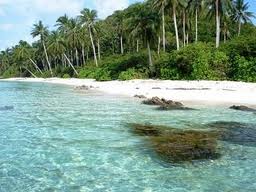
This national park was established in 1982 as the first marine national park in Indonesia. This area is a series of islands consisting of more than 100 coral islands that stretches 80 km north of Jakarta Bay. The islands and coral reef is home to a large number of species of fish and mollusks and the northern part of the the archipelago is an area where sea turtles lay their eggs. The islands are also home to hundreds of people living as fishermen or those whose jobs relate to marine resources. Recently, some residents also worked at the resort, which is located in these areas. But they still low income of the local population and health problems, as well as clean water which continues to affect the quality of life of local communities.
With a relatively large population and increasing use of some islands to serve as a tourist resort, has brought this region into one of the first areas to implement systems for the utilization of appropriate zoning.
Zoning will create several different utilization's :
- core preservation zone that should not be disturbed at all.
- protection zone which allows limited usage.
- intensive use areas and buffer zones, allow the existence of economic activities,
including tourism & fisheries.
Because it is quite close to Jakarta then the problem of loading and unloading ships, garbage disposal, various forms of pollution, large-scale fishing, reef explosion, dredging sludge and improper land use, continue to threaten the existence of the region as a place of preservation. To anticipate this, then pursued several training national park staff, development and deployment of the navigation code for divers and visitors to national parks, monitoring of coral reefs and sea turtles nest and also prepare an integrated management plan of assistance to the Jakarta Bay. Have also made efforts to seek alternative sources of income for local fishermen engaged in fishing practices using cyanide poisoning and explosion rocks to meet the demand for aquarium decoration.
Roads that can be passed in order to enter the National Park is through the Marina Ancol beach, located in the northern part of Jakarta. Information center located on the Pramuka Island taken within an hour away by motorboat. From the central islands of the core conservation zone can be visited by charter boats or vessels owned by the national park. Some of the island with a resort can be reached by plane from the local airport in Jakarta. I hope you and your family can visit and admire the sights of Kepulauan Seribu National Park.